
The work
Define the most demanding drill the athlete will perform regularly.
REPSTYS Field Guide 01
Start with the athlete and the work. Then plan the cage, machine, protection, surface and setup as one complete system.
Start the System Builder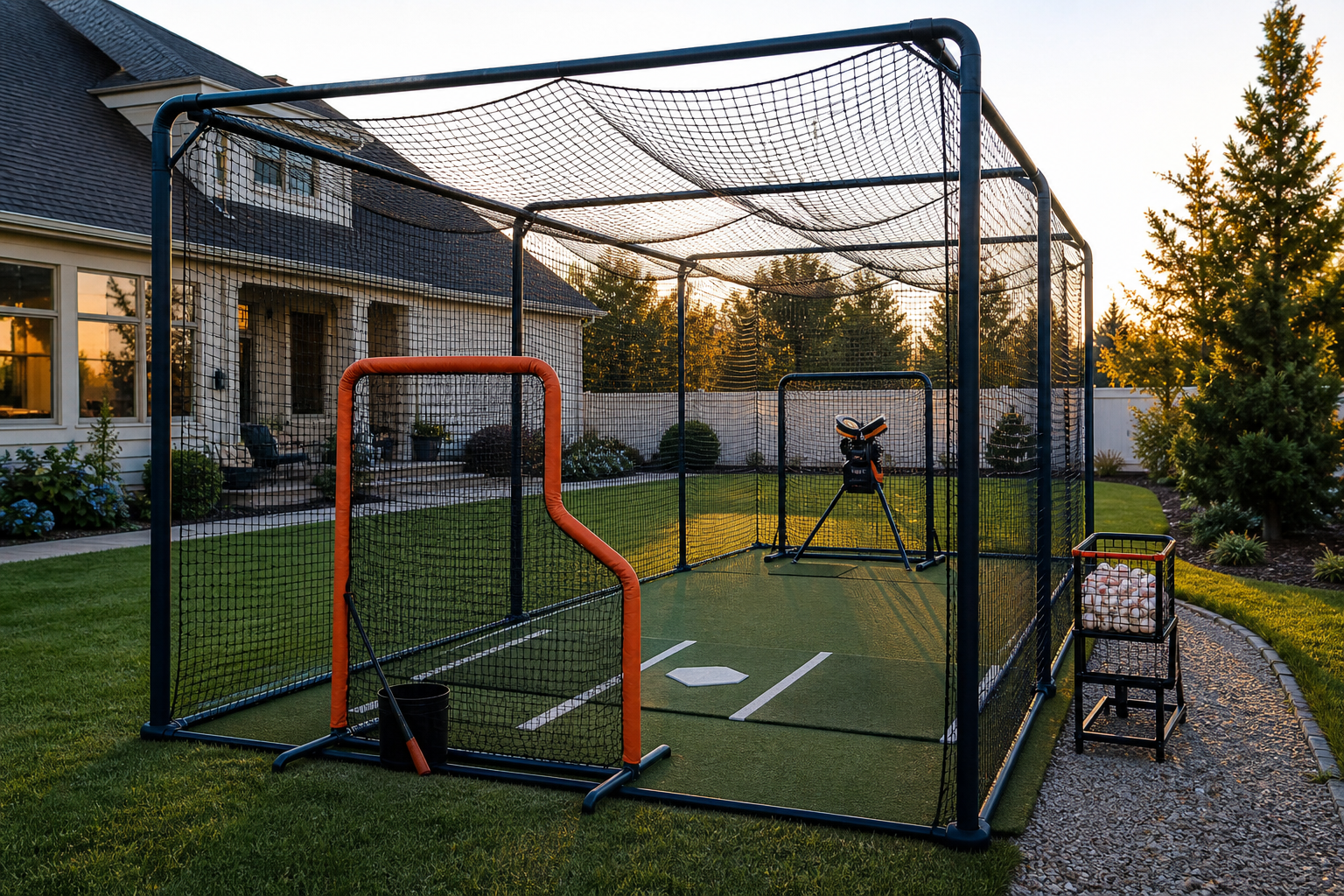 Plan the system before the products.
Define the most demanding drill the athlete will perform regularly.
Measure usable length, width and height, then account for access and surrounding exposure.
Match durability and maintenance to weekly reps and the number of athletes.
Verify that containment, machine, balls, protection, surface and power work together.
The central idea
A complete home setup must contain the ball, support the planned drills, protect the people using it and fit the site. If regular machine work is part of the goal, the cage, machine, feeder, balls, screen, power and operating distance must be planned together.
Define the most demanding drill that will happen regularly. A tee and front-toss area has different requirements from a dedicated machine-hitting lane. Advanced pitch work and high-volume use add another level of capability and durability.
Sport, athlete stage, regular drills, weekly use, number of athletes and how long the system should serve.
Record the clear length, width and height available after accounting for fences, rooflines, gates, landscaping, equipment storage and normal household activity. Then map where the athlete, thrower or machine, operator and balls will be.
Product dimensions do not automatically equal a safe or workable operating area. Required clearances and distances must be verified for the final equipment and drill plan.
The containment system must match the way the space will be used. Consider ball speed, frequency, athlete position, thrower or machine position, adjacent property and whether the system will be stored, seasonal or mostly permanent.
A machine cannot be selected responsibly from speed or pitch features alone. Confirm the sport, athlete level, planned drills, operating distance, ball type, feeder compatibility, power, placement surface, operator position and storage.
Baseball and softball use, machine conversion, feeders and training balls must be verified in current manufacturer documentation before the configuration is finalized.
Map every person and exposed area before equipment selection. A complete plan may need thrower protection, machine or operator protection, ball containment behind the athlete and added protection for nearby activity or property.
Follow the current instructions for every selected component. Escalate unusual site or safety questions to the manufacturer or a qualified professional.
The system still has to arrive, stand securely, operate consistently and be maintained. Review the surface and slope, drainage, wind and weather exposure, anchoring or weighting, electrical access, cable routing, delivery path, assembly responsibilities and off-season storage.
Tee work, dry swings and front toss in a focused, consumer-manageable training area.
A dedicated home hitting lane built around repeat machine-assisted practice.
A guided, high-capability environment for advanced work and higher training volume.
Pause and verify
Measurement checklist
01Usable length, width and height
02Entry path and delivery access
03Athlete, thrower and operator positions
04Windows, neighbors, vehicles and adjacent activity
05Surface, slope and drainage
06Anchoring or weighting conditions
07Power location and cable route
08Weather exposure and storage plan
09Expected weekly use and athlete count
10Future expansion plans
Your sport. Your space. Your system.
Ten decisions identify the best starting class and show what must be verified next.
Start the System Builder Final components, brands, availability, pricing, freight, warranty and support remain subject to validation.